
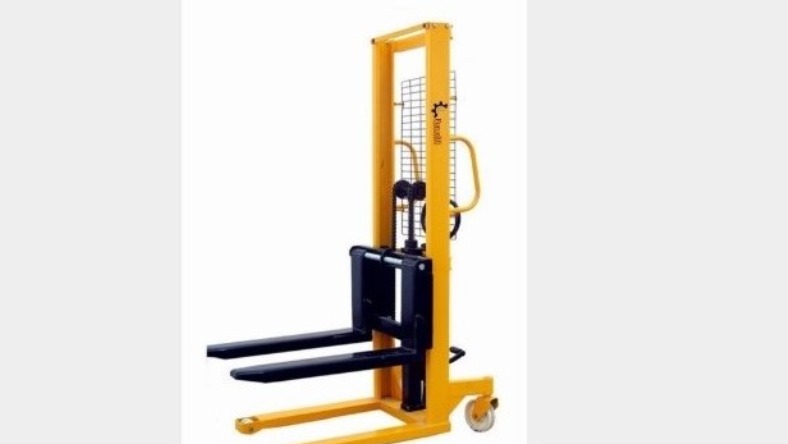
Storage operations do not all require the same level of powered assistance. The right solution depends on lifting frequency, load characteristics, travel distance and available working space.
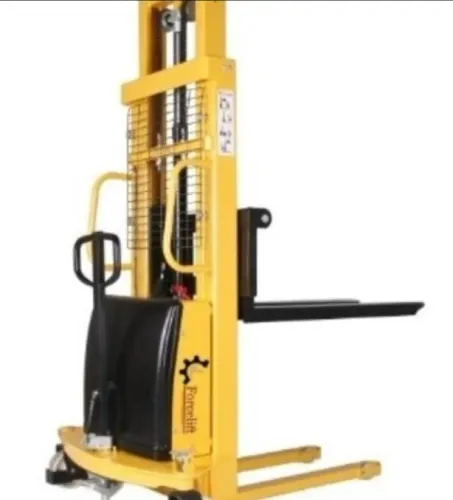
A Manual Stacker can support pallet lifting and positioning where vertical handling is required but extensive powered travel may not be necessary.
The evaluation should start with the actual storage task. Identify the usual load, maximum lift height and pallet configuration. Then consider the distance between the handling point and storage position.
Operator workload is another important factor. Equipment suitable for occasional lifting may be less appropriate when the same operation is repeated continuously. Frequency therefore needs to be considered alongside capacity.
The storage arrangement can also influence the decision. Rack access, aisle width, turning space and the location of staging areas determine whether equipment can be manoeuvred comfortably.
This is why maximum rated capacity should not be treated as the only selection criterion. Practical usability depends on how the equipment performs during the complete handling cycle.
A useful procurement exercise is to observe several typical storage movements before comparing available options. This can reveal whether the operation actually needs manual, semi-powered or fully powered assistance.
The objective is to select equipment that fits the task without adding unnecessary complexity.
For businesses assessing storage-handling requirements, Forcelift Material Movements can help evaluate suitable considerations for Hyderabad warehouses.