
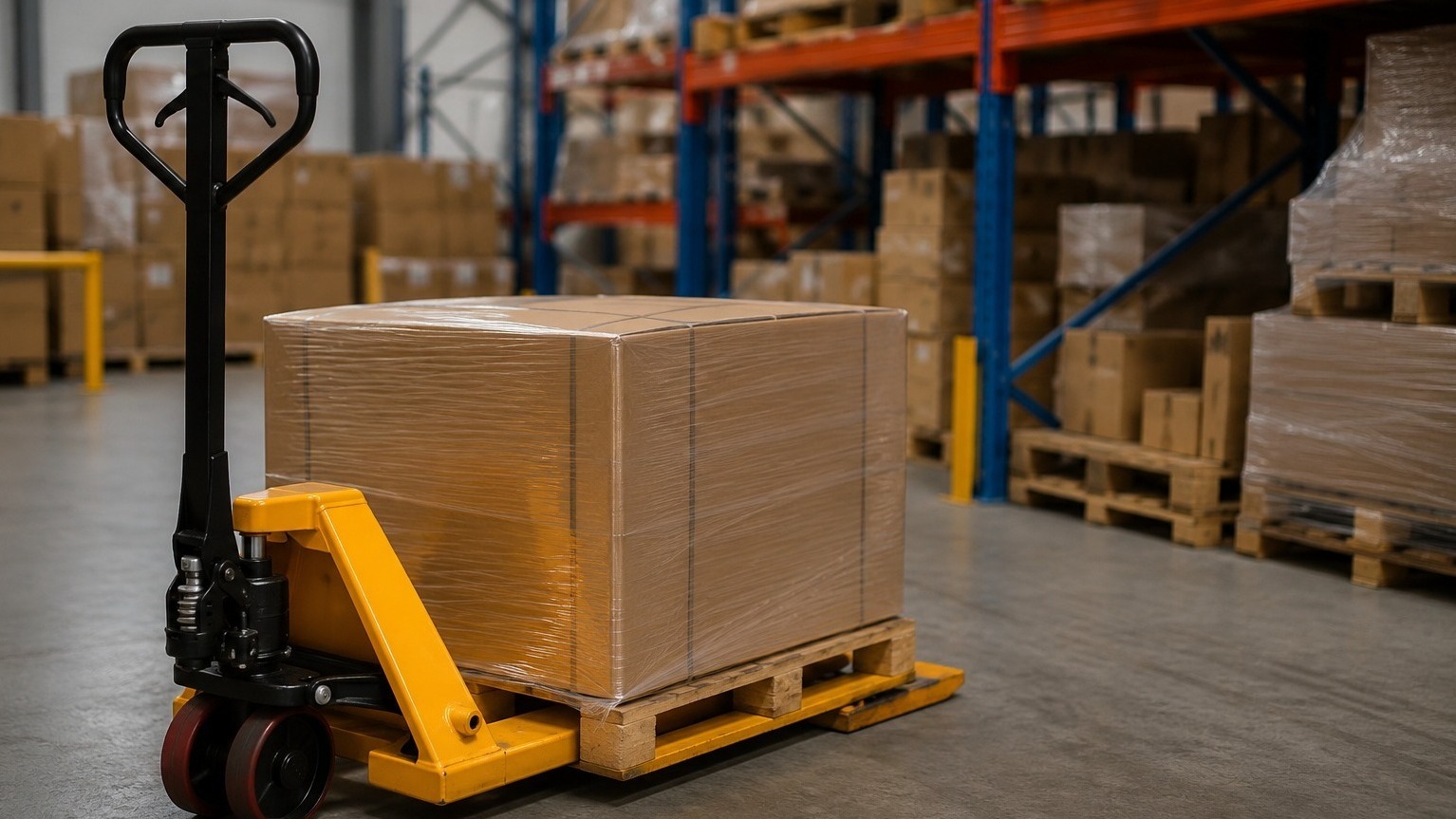
Short-distance pallet movement does not always require powered equipment. The right choice depends on distance, frequency, floor conditions, load characteristics and the amount of operator effort involved.
A Hand pallet truck is designed for moving suitable palletised loads over short distances through manual operation. Its straightforward design can be practical when the movement pattern is controlled and the workload remains manageable.
A useful way to evaluate suitability is to map one complete movement cycle. Identify where the pallet starts, where it ends, how often the transfer occurs and how much turning or repositioning is required.
Floor condition is another practical factor. Movement efficiency depends not only on the truck but also on the surface over which it operates.
Hubballi's airport cargo operations provide a relevant example of how pallet-handling equipment fits into a broader cargo workflow. Official aeronautical information identifies hydraulic pallet trucks among the cargo-handling equipment used there.
This does not mean every warehouse requires the same type of handling equipment. Different workloads can justify different approaches. Occasional short movements may suit manual equipment, while frequent or longer transfers may create a stronger case for powered assistance.
Procurement teams should also consider pallet compatibility, load stability and operator access before making a decision.
The most economical handling method is often the one that solves the actual bottleneck without adding unnecessary capability. That requires understanding the movement pattern first.
For businesses reviewing short-distance pallet movement in Hubballi, Forcelift Material Movements can help evaluate whether a manual handling approach is appropriate.