
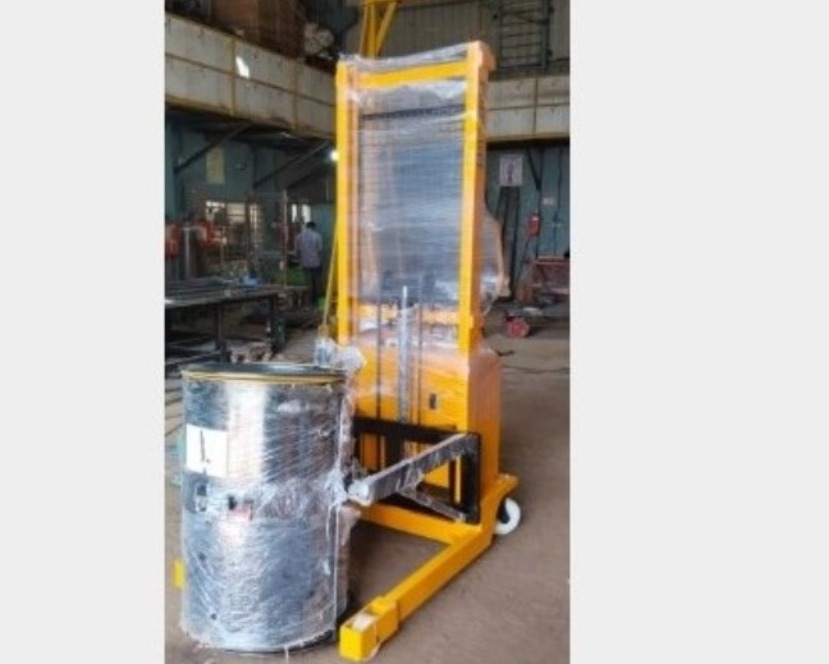
Drums present handling challenges that differ from conventional pallets. Their cylindrical shape, weight distribution and engagement requirements need to be considered before choosing equipment.
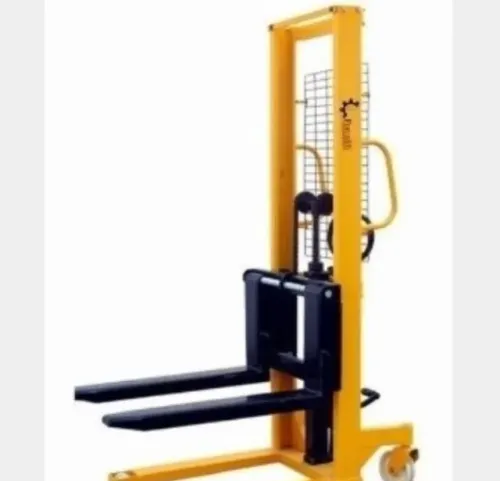
A Drum stacker can support suitable drum lifting, positioning and stacking tasks when its configuration matches the container dimensions, load characteristics and required lifting height.
Procurement should begin by mapping the complete movement cycle. Determine whether drums are collected from floor level, transferred between work areas or positioned at elevated storage locations.
Approach space is particularly important. Operators need sufficient room to position the equipment, engage the load and manoeuvre toward the destination without interfering with nearby operations.
Storage arrangement can also change the requirement. Ground-level movement and repeated elevated stacking should not automatically be treated as the same application.
Tirupati's commercial environment includes agricultural, manufacturing, processing and storage activities, meaning businesses may encounter different types of containers and handling patterns.
This does not mean specialised equipment is automatically required. The decision should come from the material itself and the movement task.
Rated capacity should be considered alongside drum dimensions, stability, lifting height, access and handling frequency. Looking at only one specification can lead to an incomplete procurement decision.
A practical evaluation therefore compares the complete workflow from collection through positioning or storage.
The right equipment should make the specific drum-handling task more controlled without creating unnecessary operational complexity.
For businesses reviewing specialised drum movement across Tirupati, Forcelift Material Movements can help assess the application before equipment selection.