
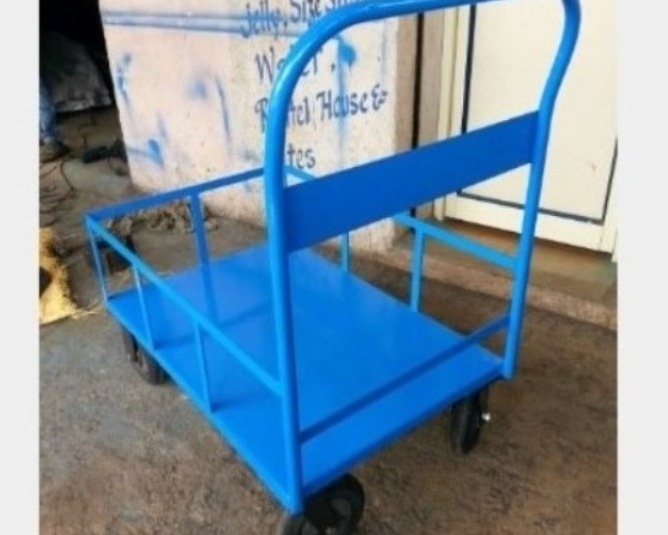
When materials need to be moved repeatedly across a facility, the right trolley can reduce unnecessary carrying and create a more consistent movement process without adding excessive complexity.
A Platform trolley can be useful for transporting suitable goods across short distances where a flat loading surface supports the material being handled. Its practical value depends on load characteristics, platform dimensions, manoeuvrability and operating frequency.
Businesses should first determine what is being moved. Cartons, containers and other non-palletised materials may have different requirements from standard pallet loads. Stability and ease of positioning should be considered alongside nominal carrying capability.
Across Mangalore, warehouses and cargo-oriented businesses can have very different internal layouts. Port infrastructure includes storage areas and cargo-handling facilities, while airport cargo operations also use platform trolleys and pallet-handling equipment. This makes application-specific selection more useful than assuming one trolley configuration suits every workplace.
Another consideration is route efficiency. If operators frequently change direction or navigate restricted areas, manoeuvrability may have more practical importance than simply selecting the highest available capacity.
Procurement should also consider how frequently the trolley will be used and whether the expected workload is consistent with its intended design.
The strongest value comes from matching the equipment to the actual movement pattern, not from adding unnecessary features.
For businesses evaluating practical transport solutions across Mangalore, Forcelift Material Movements can help align the trolley choice with the intended workflow.