
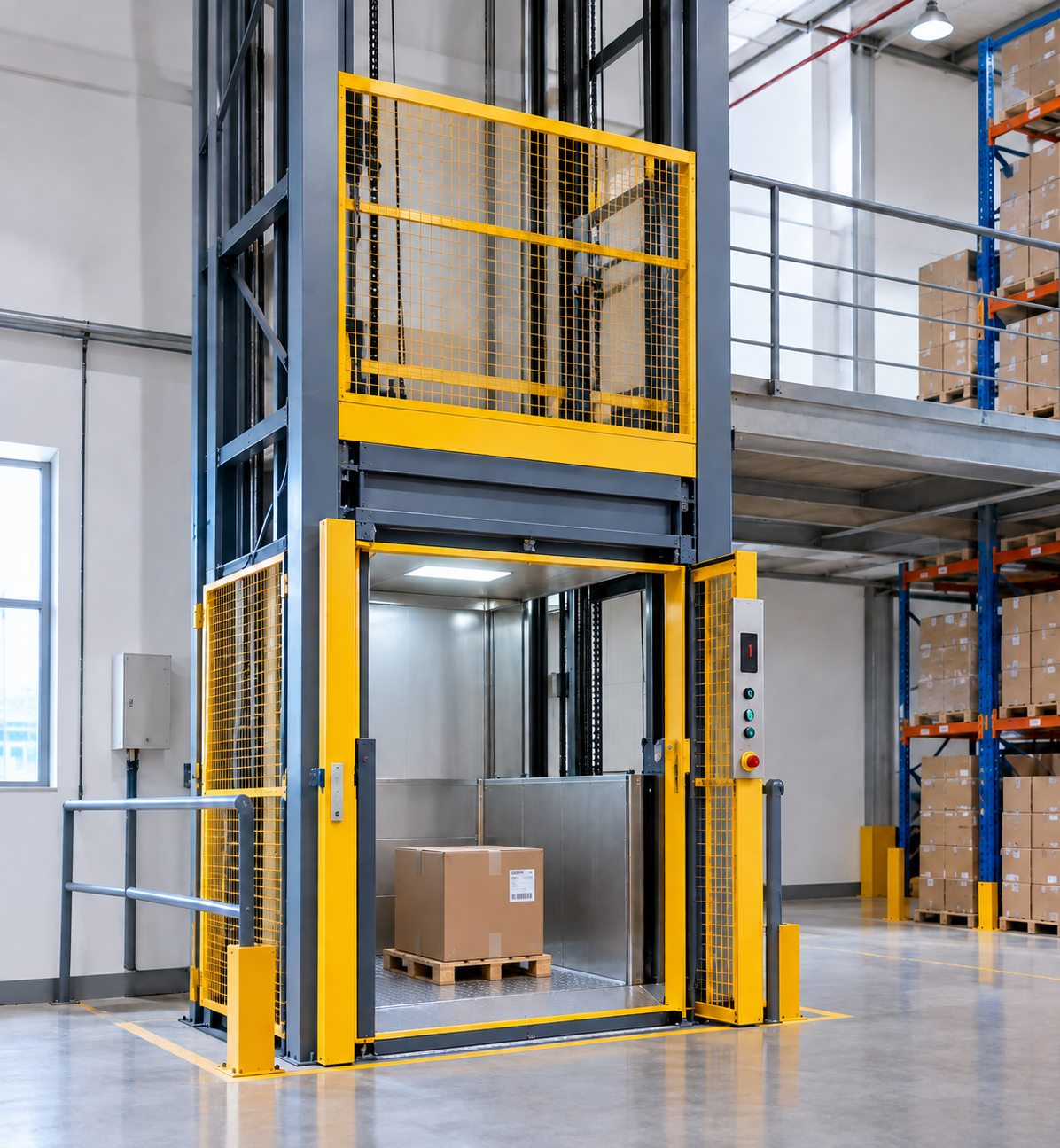
Material-handling requirements are shifting toward safer, more organised movement, with vertical transportation becoming important where floor space is limited and workflows span multiple levels.
Modern warehouses increasingly evaluate equipment according to its role within the complete material-flow process. Instead of viewing lifting equipment as an isolated purchase, operations teams consider how loading, transportation, storage and unloading connect with one another.
A Goods Lift can support vertical movement where materials need to travel between different levels of a facility. Its usefulness depends on factors such as load type, travel height, platform requirements, loading method and expected usage frequency.
One notable development in material handling is the growing focus on reducing unnecessary manual handling. This does not mean every operation needs highly automated equipment. Instead, businesses are increasingly matching equipment sophistication with actual workflow requirements.
Space planning is equally important. A lift positioned close to key material-transfer points can reduce repeated movement and improve the logical flow between floors. Procurement teams should therefore assess the proposed installation area alongside operational requirements.
In Kochi, businesses with multi-level storage, production or commercial operations may need to consider how vertical movement interacts with their existing internal logistics. The objective should be smoother material transfer rather than simply adding another piece of equipment.
Before purchasing, decision-makers should document typical load characteristics, movement frequency and the locations between which goods travel. This information provides a stronger basis for equipment selection than relying solely on general product descriptions.
For teams planning more efficient vertical material movement in Kochi, Forcelift Material Movements can help explore an equipment option suited to the intended workflow.