
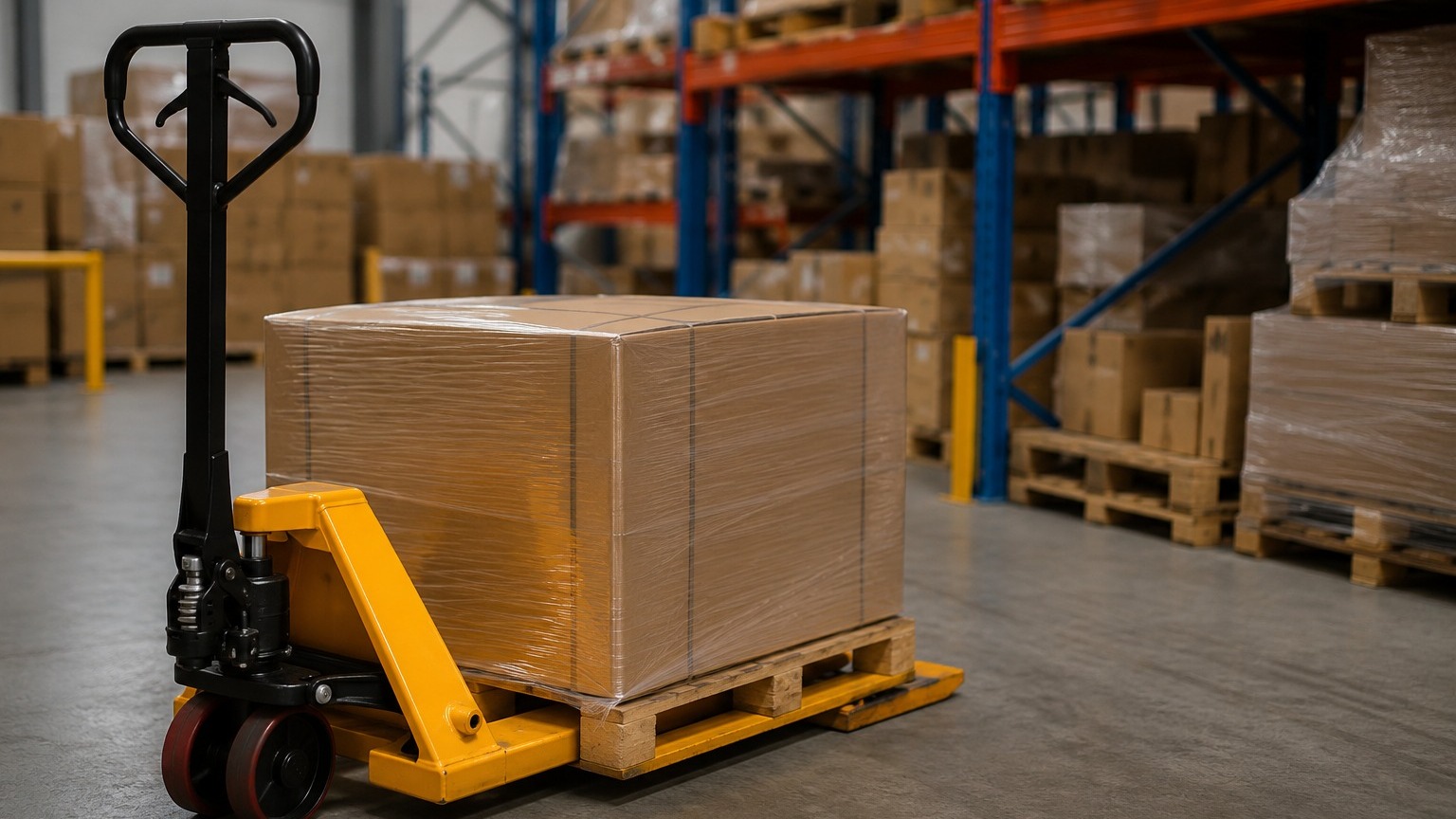
Manual equipment still has a practical role when pallet movement involves short distances, moderate frequency and relatively straightforward routes.
A Hand Pallet Truck is designed for horizontal pallet movement, making it relevant to receiving areas, staging zones and other locations where loads need repositioning without substantial elevation.
The key question is whether the equipment matches the movement pattern. Load weight, pallet dimensions and fork compatibility establish the basic requirement, while floor condition and turning space influence everyday operation.
Distance is another useful consideration. A short transfer between adjacent areas can often be approached differently from a route that requires continuous travel across a large facility.
Frequency also changes operator demands. Occasional movement may be relatively simple, while repeated pallet transfers can make manoeuvrability and physical effort more important purchasing considerations.
Businesses can improve the selection process by observing several real pallet journeys rather than relying on one idealised movement. This can reveal differences in load type, access and staging that affect equipment suitability.
The objective is not to replace manual handling automatically. It is to determine where a straightforward handling solution remains appropriate and where greater assistance may be justified.
This creates a more balanced procurement decision based on actual operational needs.
For organisations assessing pallet movement methods, Forcelift Material Movements can help review suitable handling requirements for Bengaluru operations.