
Moving materials between levels becomes more effective when the lifting point is planned as part of the entire route rather than treated as a standalone installation.
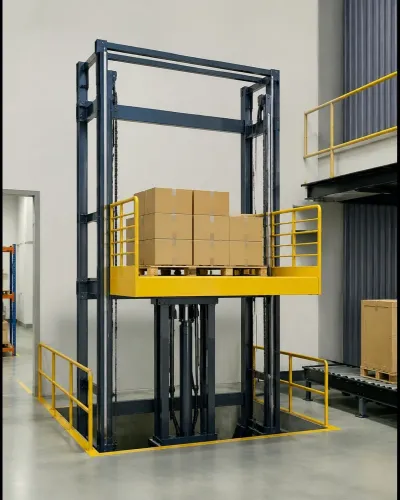
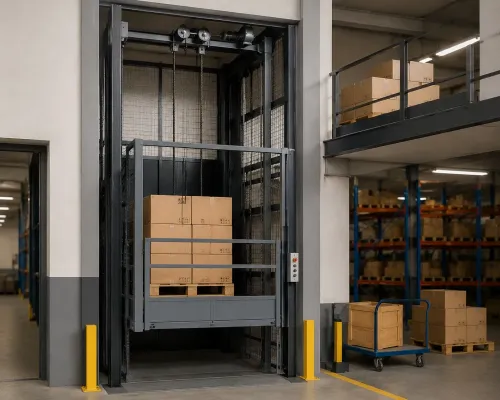
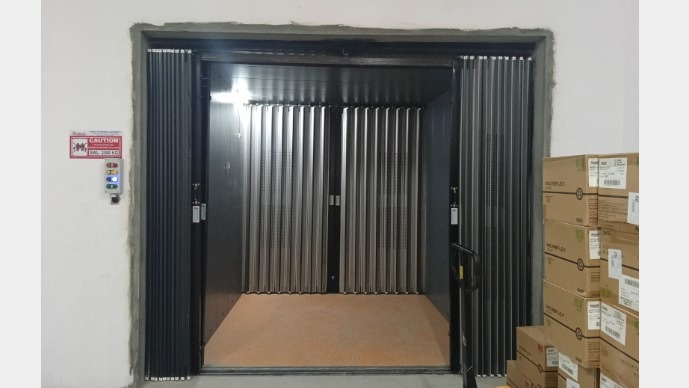
A Goods Lift can connect different levels where materials need to travel between storage, production, staging or dispatch areas.
The important planning exercise is to follow the load from origin to destination. How does it reach the lift? What equipment is used before loading? How is it removed at the other level? What happens next?
These questions help establish requirements for platform dimensions, load capacity and lifting height while also revealing potential workflow conflicts.
The type of goods can change the requirement considerably. Palletised products, containers and irregular materials may need different loading arrangements even when their weights are similar.
Frequency should also influence the decision. A lift used occasionally can have a different operational role from one forming part of a continuous material route.
Access around both loading points deserves attention too. If the surrounding space does not accommodate the handling equipment approaching the platform, vertical movement may simply transfer the bottleneck to another stage.
A useful facility-planning method is to map recurring material journeys and identify where vertical transfer removes unnecessary handling or creates new handovers.
For businesses planning multilevel material movement, Forcelift Material Movements can help assess the workflow requirements across Bengaluru.