
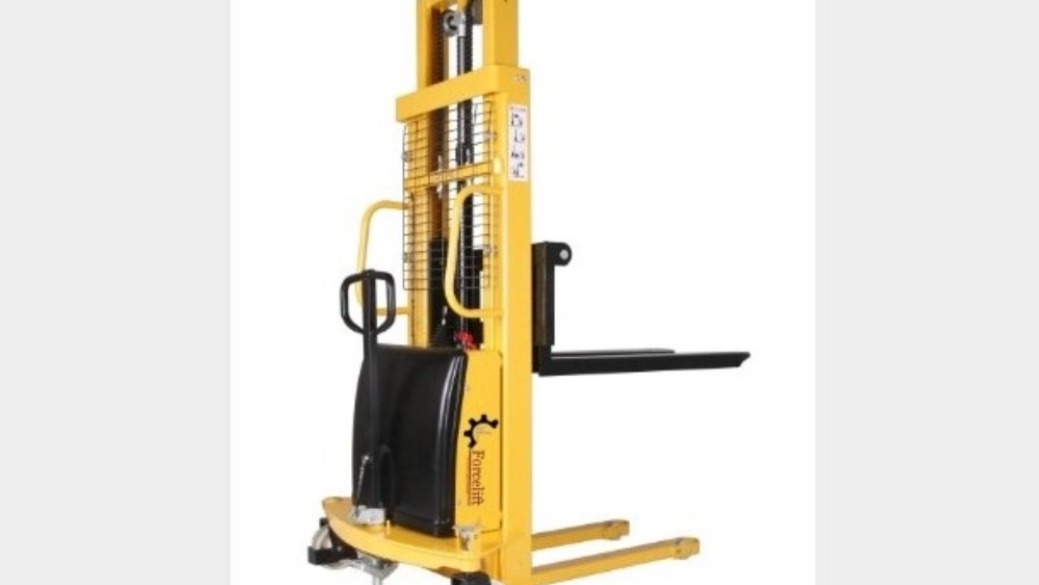
Between fully manual handling and more extensively powered equipment, there are applications where partial powered assistance can provide a sensible balance.
A Semi-Electric stacker can provide powered lifting while retaining a relatively straightforward operating approach. Its suitability depends on workload, lifting frequency, pallet dimensions, travel requirements and facility layout.
The most important question is whether lifting or horizontal travel is creating the actual bottleneck. If repetitive elevation is the main issue, powered lifting may address it directly without adding unnecessary capability elsewhere.
Procurement teams should also examine storage clearances and approach space. A stacker needs to work comfortably around the pallet positions where it will actually be used.
Load distribution and lifting height should be assessed alongside operating frequency. A solution should match the real task rather than simply being selected by its maximum capability.
Nellore's industrial profile makes this decision particularly relevant. Government information identifies large and small industrial operations across sectors such as food processing, pharmaceuticals, metal products, power, automotive components and other manufacturing activities.
Different facilities may therefore have very different handling requirements despite operating within the same district.
The practical lesson is to select equipment based on the specific movement problem. Partial automation can be valuable when it removes repetitive effort without introducing unnecessary complexity.
For procurement teams comparing assisted pallet lifting across Nellore, Forcelift Material Movements can help evaluate whether a semi-powered approach suits the workflow.