
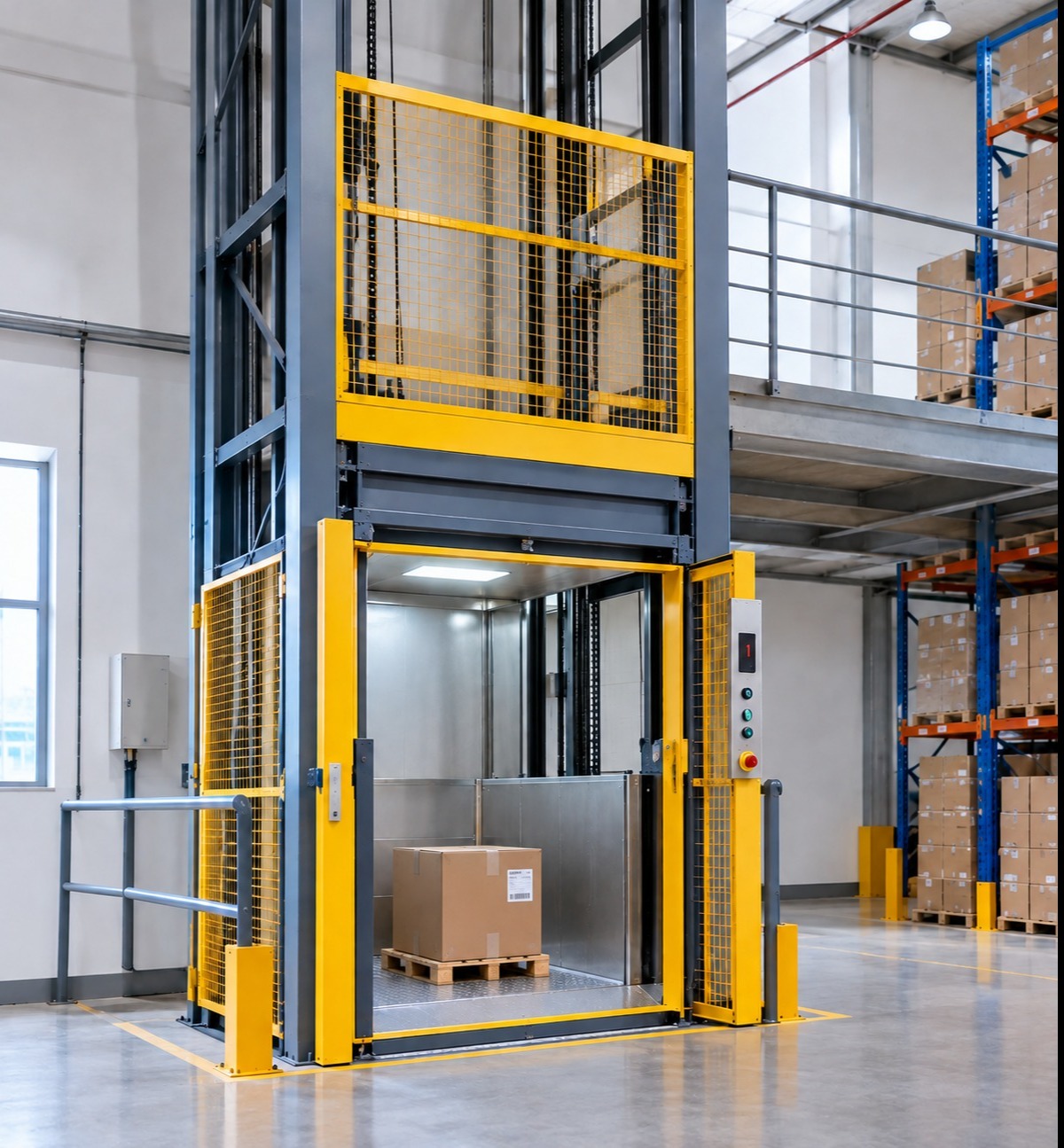
A goods lift becomes part of a larger workflow as soon as materials arrive at one level and continue their journey at another.
A Goods Lift can support vertical movement between storage, production, staging and dispatch areas, but its effectiveness depends on how well the loading and unloading points connect to surrounding operations.
Begin with the lower-level movement. Identify how materials arrive and how they are positioned for lifting.
Then examine the destination. Once the load reaches the next level, determine whether it moves toward storage, production or another handling stage.
Capacity and lifting height remain fundamental, while platform dimensions can become critical when goods vary in size or configuration.
Frequency should also be considered. Repeated transfers require closer attention to access and workflow continuity than occasional movement.
Mysuru's industrial ecosystem spans several established industrial areas, and Karnataka's current industrial policy specifically recognises logistics and warehousing as an industry sector.
Documenting several real material journeys can reveal whether the vertical transfer is reducing handling or simply moving the bottleneck to another point.
The best solution is one that connects levels while fitting naturally into the complete material route.
For businesses reviewing multilevel warehouse movement, Forcelift Material Movements can help evaluate the application for Mysuru operations.