
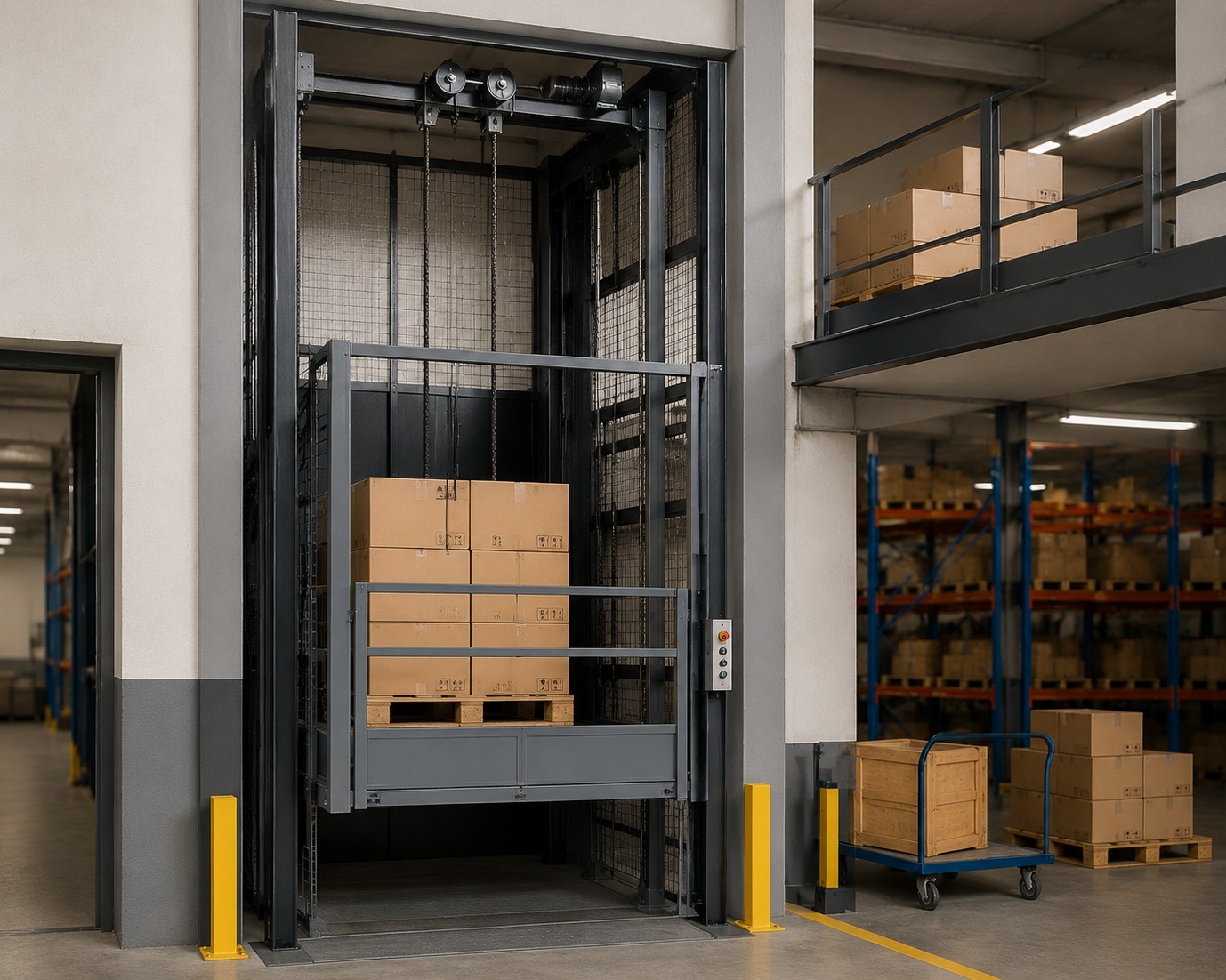
A vertical goods movement system should fit the facility around it. The lift itself may perform correctly while the surrounding workflow remains inefficient if loading and unloading are poorly planned.
A Rope Hoist Goods Lift can support material movement between different levels where a dedicated vertical transfer is required.
Capacity, lifting height and platform dimensions establish the technical starting point. The surrounding handling process determines whether the installation will work efficiently in practice.
Look at the lower-level approach first. What brings the material to the lift?
Then examine the upper-level handoff. Where does the material go after it leaves the platform?
This is especially relevant in engineering and manufacturing environments where components may move between production, inspection, storage and dispatch stages.
Belagavi's industrial base includes foundry, aerospace, automotive components, machine components and hydraulic equipment, giving facilities varied material-flow patterns to consider.
Frequency can then determine how important smooth handovers become. A rarely used lift and a regularly scheduled production transfer should not be evaluated in exactly the same way.
Mapping the complete route can expose unnecessary manual transfers and help determine where vertical lifting creates the greatest operational value.
For businesses planning vertical goods handling, Forcelift Material Movements can help evaluate suitable requirements across Belagavi.